Look a little closer.
The details that make New York, New York.
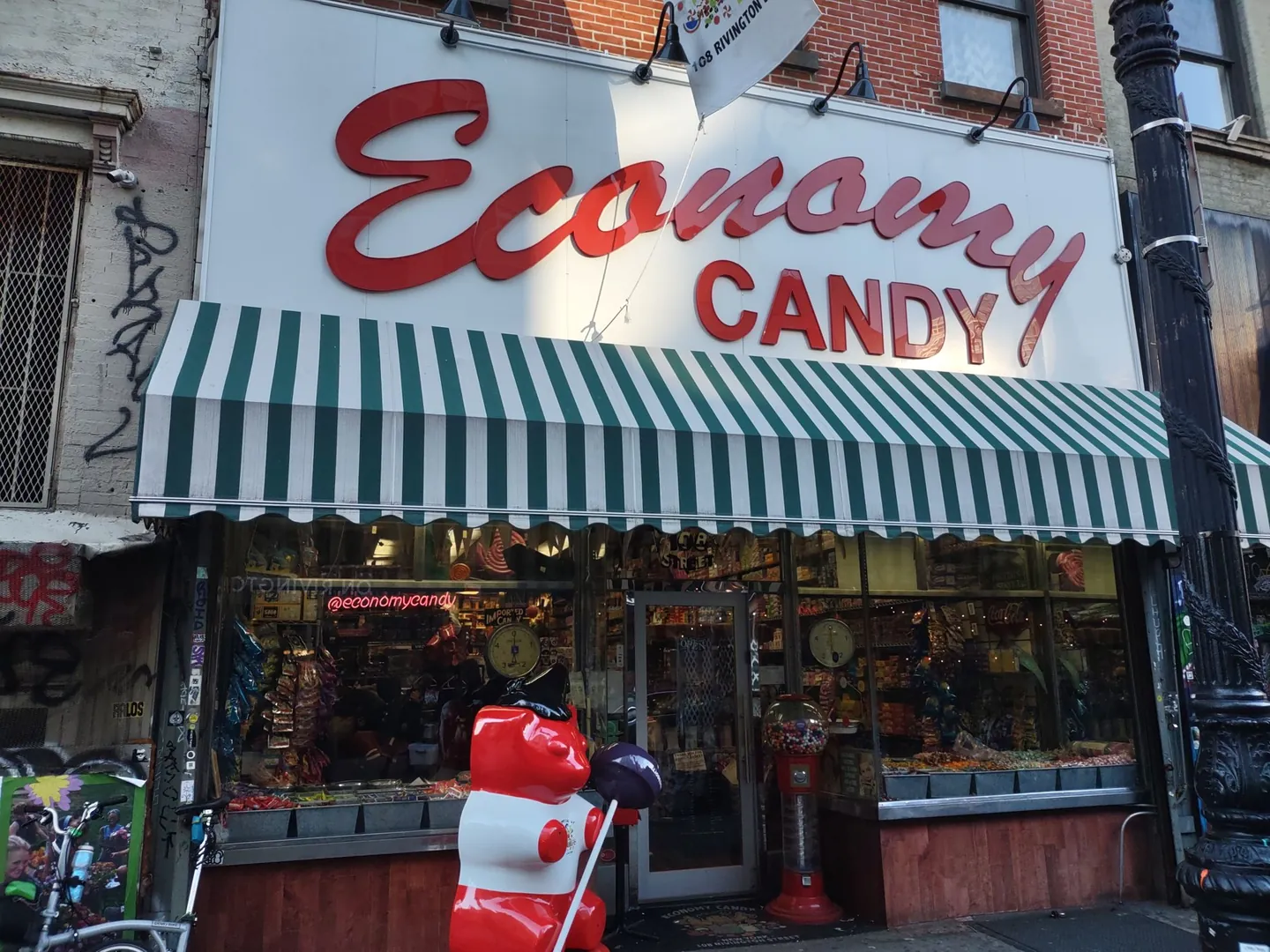

At street level.
Look up at the windows. Follow the lines of a fire escape. Notice the lettering above a neighborhood doorway.
The city gives us plenty to look at. This is a place for the small details that stay with us.
A different kind of city guide.
No must-see checklist. Pick a theme, take a block slowly, and see what you find.
Street lettering · The neighborhood bodega · Our other neighbors
Read the street.
Start on a storefront-lined block in the Lower East Side or Chinatown. Choose one side of the street and walk it twice: once for the shops, once for the signs. You’ll notice more the second time.
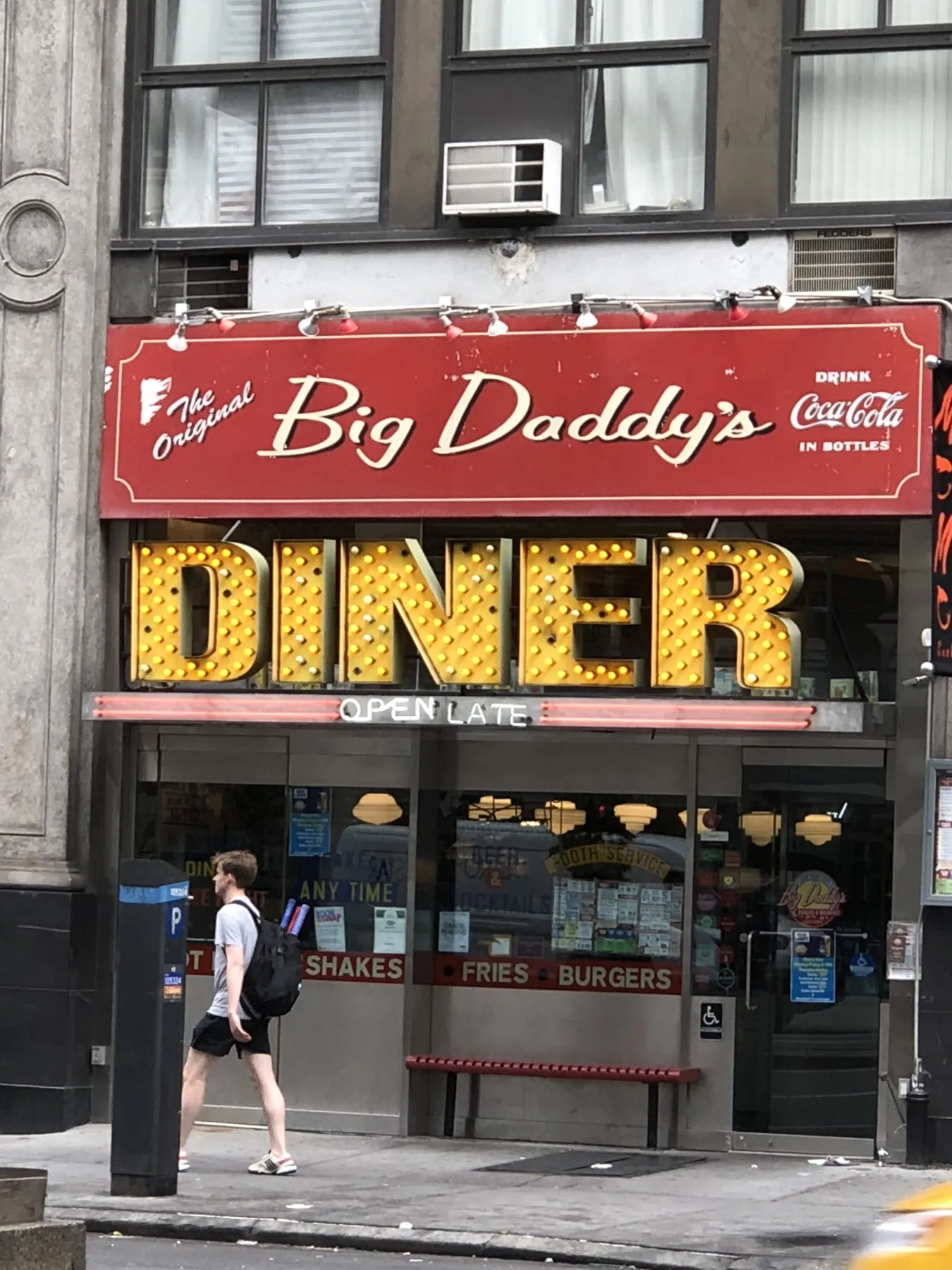
A storefront can speak in more than one voice. Here, the loose script of “Big Daddy’s” sits above big, bulb-lit block letters; a thin neon line adds “OPEN LATE” underneath. Look at how each sign asks for your attention differently—through shape, scale, or light. You can try this exercise on any block; this photograph is a record of a moment, rather than a promise of what you’ll find there today.
Five things to look for
- Hand-painted lettering with small differences between repeated letters.
- A faded name above a newer awning: one business leaving a trace for the next.
- Neon, raised metal letters, and painted glass sharing the same block.
- A window crowded with handwritten prices, hours, and neighborhood notices.
- A sign that looks different when you step back and include the whole building.
Take one wide photograph, one detail, and a note of the cross streets. Stay on the public sidewalk and keep doorways clear. The goal is a small record of what caught your eye, not a perfect photograph.
Try this: Find three different versions of the same word—“coffee,” “deli,” or “open”—and compare the lettering.
One door, a lot of everyday life.
A bodega is a small neighborhood grocery or corner store. In New York, the word also carries the feeling of a familiar place: the coffee stop, the spare-key conversation, the last-minute milk. Every store has its own version of that role.
Start with your nearest corner.
Skip the search for the “best” bodega. Notice the one people on the block already use. Look at what sits outside, what fills the window, and what the counter makes room for. Flowers, bagels, hot coffee, household basics, and a bulletin board tell different parts of the story; no shop needs all of them to count.
Buy something you actually want, say hello, and let the visit be a visit. Ask before taking photographs inside. If there’s a cat, let it approach you; a sleeping employee is still on the clock.
Try this: On your next three visits, notice one detail that you missed before. A regular’s order. A handwritten sign. The place where the cat has decided to sit.
What makes a bodega more than a convenience store? · Meet the unofficial manager
Share the sidewalk.
Pigeons at a busy plaza. Squirrels tracing a park fence. A dog convinced the whole block exists for its morning walk. New York’s other residents make their own use of the same spaces we hurry through.
Watch a routine, not just an animal.
Choose a public park path or plaza and pause at the edge of the flow of people. Follow one animal’s movements for a minute: where it stops, what it avoids, and how it adjusts when someone walks past. You don’t need to approach it to learn something.
For a closer look at Central Park’s raccoons, start with our story about the park’s wooded habitat and documented sightings. Seeing one is a possibility, never a promise. Keep your distance, don’t feed wildlife, and leave nests, dens, and sheltered resting places alone.
Try this: Write down one behavior instead of collecting a species list. “The pigeon waited until the stroller passed” is a better observation than “saw pigeon.”
Read about Central Park’s late-shift neighbors · Explore The Real Residents of NYC