A whole neighborhood, behind one door.
Coffee before the train. Flowers on the way home. The bodega fits an astonishing amount of daily life into a very small space.
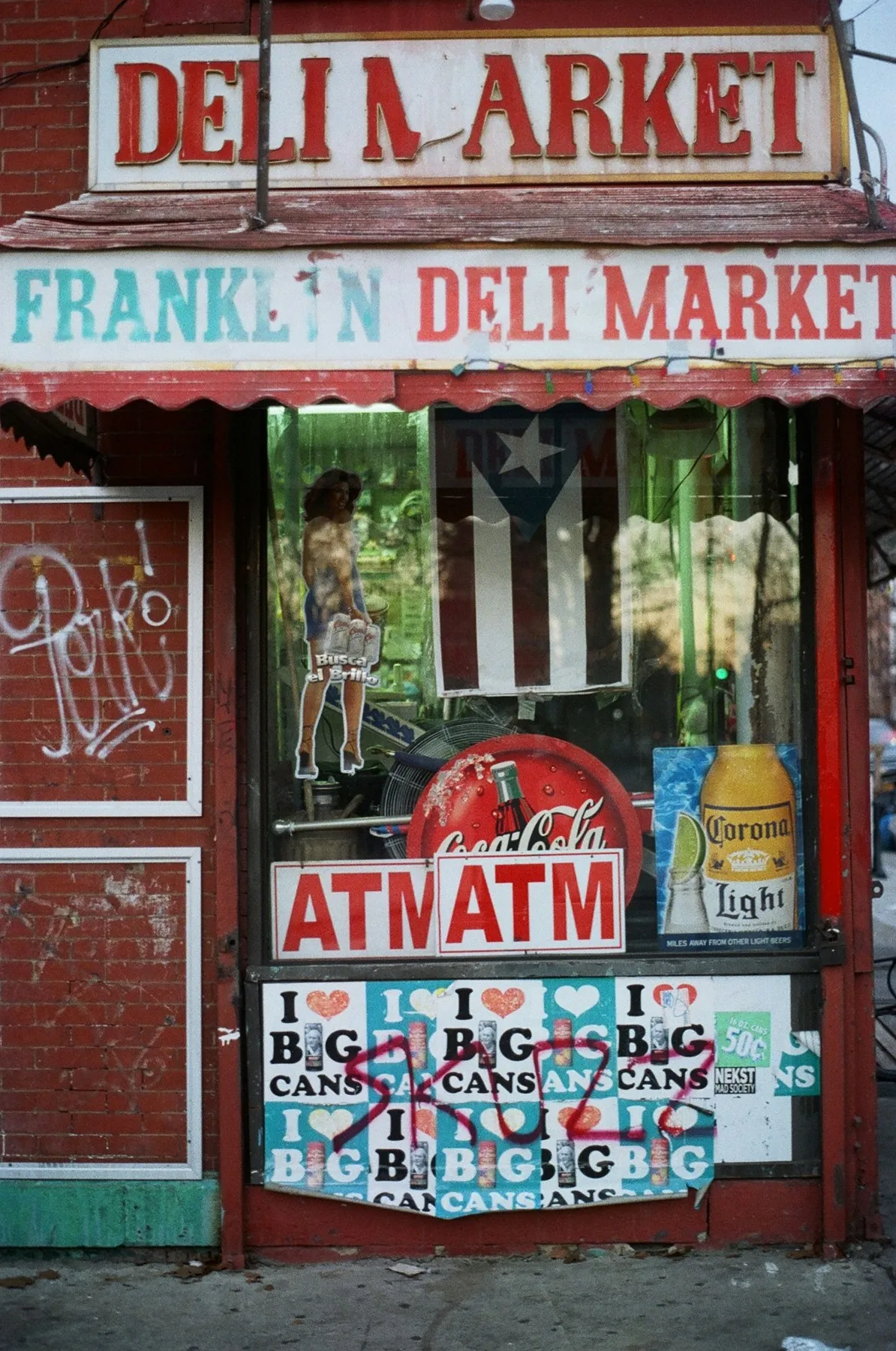
There’s a particular kind of New York errand that begins with “I’ll just run downstairs.” You don’t make a list. You don’t find your car keys. You put on shoes, take the keys you actually need, and head for the store on the corner.
Maybe it’s milk. Maybe it’s a bagel and a coffee because the morning has already got away from you. By evening, the same doorway might be where you pick up a bunch of flowers before going to someone’s apartment. A few square feet of sidewalk and a crowded interior can serve several versions of your day.
What is a bodega, exactly?
In everyday New York usage, a bodega is a small neighborhood grocery or convenience store, often independently run, where you can buy basics without making a supermarket trip. Think milk, eggs, snacks, drinks, and household odds and ends. Some also make sandwiches, pour coffee, sell produce, or put flowers outside. Those extras vary from store to store.
If you’re visiting from the Midwest, “the corner convenience store” is a useful starting point. The difference isn’t a special category of merchandise. It’s the local name, its cultural history, and, at many shops, the relationship between the counter and the surrounding block.
The terms overlap. A convenience store is the broader description; it can be independent or part of a chain, on a neighborhood street or beside a gas station. A deli puts prepared food and sandwiches at the center of the idea, although plenty of bodegas have deli counters. A corner store describes the familiar local shop, even when it isn’t literally on a corner. New Yorkers may use more than one of these names for the same place.
A cat is optional. So are flowers and a breakfast grill. What makes the word “bodega” distinctive is the New York story behind that everyday shop.
Why we call it a bodega
The word comes from Spanish. Its meanings include a storeroom or a place for storing wine; the Diccionario del español de México records that storage meaning. In New York, it acquired a particular neighborhood meaning through the city’s Spanish-speaking communities, especially Puerto Rican shopkeepers and customers.
That history matters. The Clemente Center’s Historias project describes Puerto Rican merchants organizing around commerce, culture, and community needs. The shops were places to find familiar products, but their owners also helped connect neighbors to one another and to support.
“Bodega” carries some of that history into an ordinary sentence. New Yorkers also say deli and corner store, and the labels overlap. There isn’t a single inventory that settles the question. A sandwich counter doesn’t automatically make one shop a bodega, nor does a cat.
And in the Midwest?
You might call a similar place a convenience store, a corner store, or simply by its name. “Convenience store” describes what it offers: useful things, close at hand. “Bodega,” in New York, also reflects the people and language that helped shape this kind of shop.
The distinction isn’t that Midwestern stores can’t be beloved neighborhood places. Of course they can. Nor is every New York bodega a community institution. But on a city block where people walk past the same counter repeatedly, the chance for familiarity is built into the errand. Breakfast, a forgotten ingredient, a late snack: several small visits can become a relationship.
The morning counter
A good breakfast counter does something simple very well. It gets you fed and gets you on your way. A bagel wrapped for the walk. Coffee in a paper cup. The brief negotiation over cream, sugar, and whether you have time for something hot.
Not every bodega has a grill or serves bagels. Each has its own arrangement, and regulars learn it. You know where to stand, what to order, and which person is likely to be working. When someone remembers your coffee, a tiny piece of a large, anonymous city stops feeling anonymous.
Flowers beside the everyday things
The assortment can be wonderfully practical. Where flowers are sold, they might share the sidewalk with produce, a delivery cart, and someone trying to get through the door. Inside, the thing you need may be squeezed between things you hadn’t thought about needing.
Flowers belong here because occasions don’t always arrive with a plan. Dinner with a friend. An apology. A Friday when the apartment could use something living on the table. It’s lovely to be able to buy them on the same walk as breakfast for tomorrow.
Someone knows the cat’s name
And then there’s the shop with a cat. You look for it before you look for what you came to buy. Another customer asks whether it’s upstairs. The person at the counter explains its preferred sleeping spot. For a moment, everyone has something in common.
The cat gets the photographs, but the people do the work: opening, stocking, cooking, cleaning, handling deliveries, and answering questions. Their attention is what turns an address into “our place.”
A small piece of belonging
These are working businesses, with long days and bills to pay. Affection alone doesn’t keep the lights on. Buying something, being patient when it’s busy, and treating the people behind the counter well are everyday ways to return the care.
You don’t need every visit to become a conversation. Sometimes you really are just buying milk. Still, there’s comfort in knowing the door, the counter, the route home. A neighborhood takes shape through those repetitions.
You went downstairs for one thing. You came back with a little more of a place to live.