New York: The Wild Kingdom
From Fifth Avenue hawks to Rockaway plovers, a look at the animals that make a home in New York.
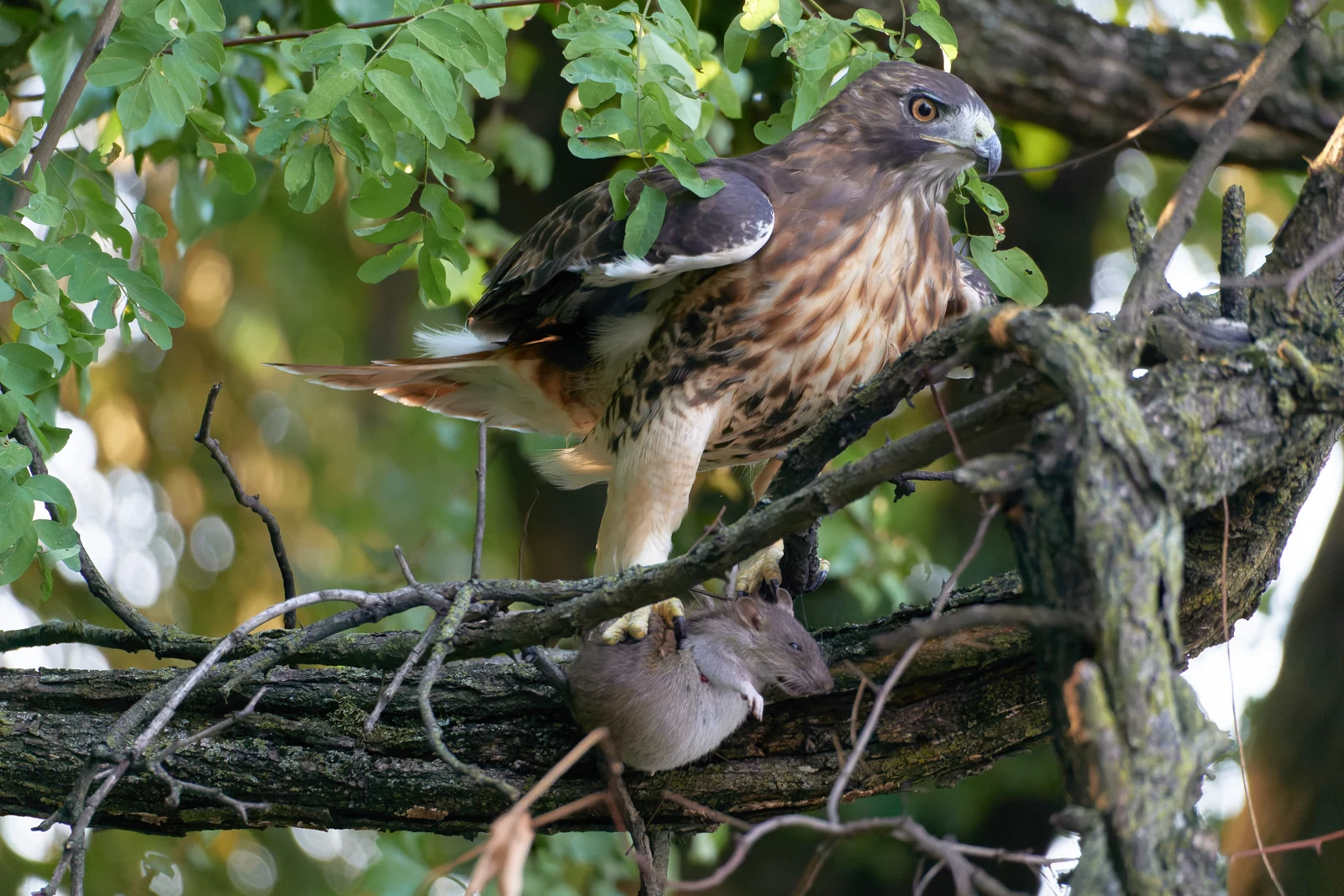

A red-tailed hawk can hunt over Washington Square Park and build a nest on a bridge. New York City’s wildlife office lists the RFK Bridge among the places hawks have nested, alongside buildings at CUNY and NYU. The nest itself is made of familiar stuff: twigs, pine needles and other plant material carried up to a spot with a good view.1
If you see one above Fifth Avenue, take a second to watch where it goes. A high perch gives a hawk a place to look for prey. Down on the block, the way we deal with rats can come back to the bird. A hawk can be poisoned by eating a rodent that’s eaten rat poison. Reflective windows pose another hazard.1
After dark in the Bronx
Coyotes began making their way into the Bronx from elsewhere in New York State in the 1990s. They eat what’s easy to find, which can mean rodents, birds, insects or vegetation. They’re generally more active after sunset, though the city says a daytime sighting is possible.2,3
If you do see one, give it room. WildlifeNYC recommends staying at least 150 feet away, keeping dogs leashed and leaving the coyote to find its own dinner.3
Deer show up in the Bronx and on Staten Island, too. On Staten Island, the city uses sterilization, traffic measures and monitoring to manage the population. Too many deer browsing in the same woods can damage the vegetation. In autumn, when bucks travel farther during breeding season, a deer can turn up in the road while you’re still looking for the next traffic light.5
A nursery on the beach
At Rockaway, look for the fencing before you look for the birds. NYC Parks has managed a nesting area in Edgemere since 1996. Roughly a mile of beach between Beach 38th and Beach 57th streets generally closes from mid-May through August so piping plovers and other shorebirds can breed.4
A plover’s nest is a shallow scrape in the sand, sometimes lined with pebbles and shell fragments. The chicks can walk and feed themselves within hours of hatching. Their plumage is close to the color of dry sand, so even a beach that looks empty may have a lot going on. Follow the signs and watch from a distance.4
From the beach, the wildlife map keeps going. New York State documents humpbacks feeding off the city in summer and harbor seals along southeastern Long Island in winter. Humpbacks follow schools of menhaden through New York waters. Nearer in, the ponds and marshes at Jamaica Bay Wildlife Refuge provide feeding grounds for herons, egrets and ibis. Songbirds and small mammals find food and shelter in the refuge’s woods and gardens.6,7
If you feel like taking binoculars somewhere, start with a park or stretch of waterfront you already know. At Jamaica Bay, try spending a few minutes looking at the edge of a pond. On an ordinary walk through Manhattan, look up at the ledges once in a while. You might catch a hawk looking down.
Sources & further reading
Sources checked November 16, 2026.