Filthy, Broke
& Brilliant
New York City, 1970–1985
From the movie houses on 42nd Street to a party in a Bronx recreation room.
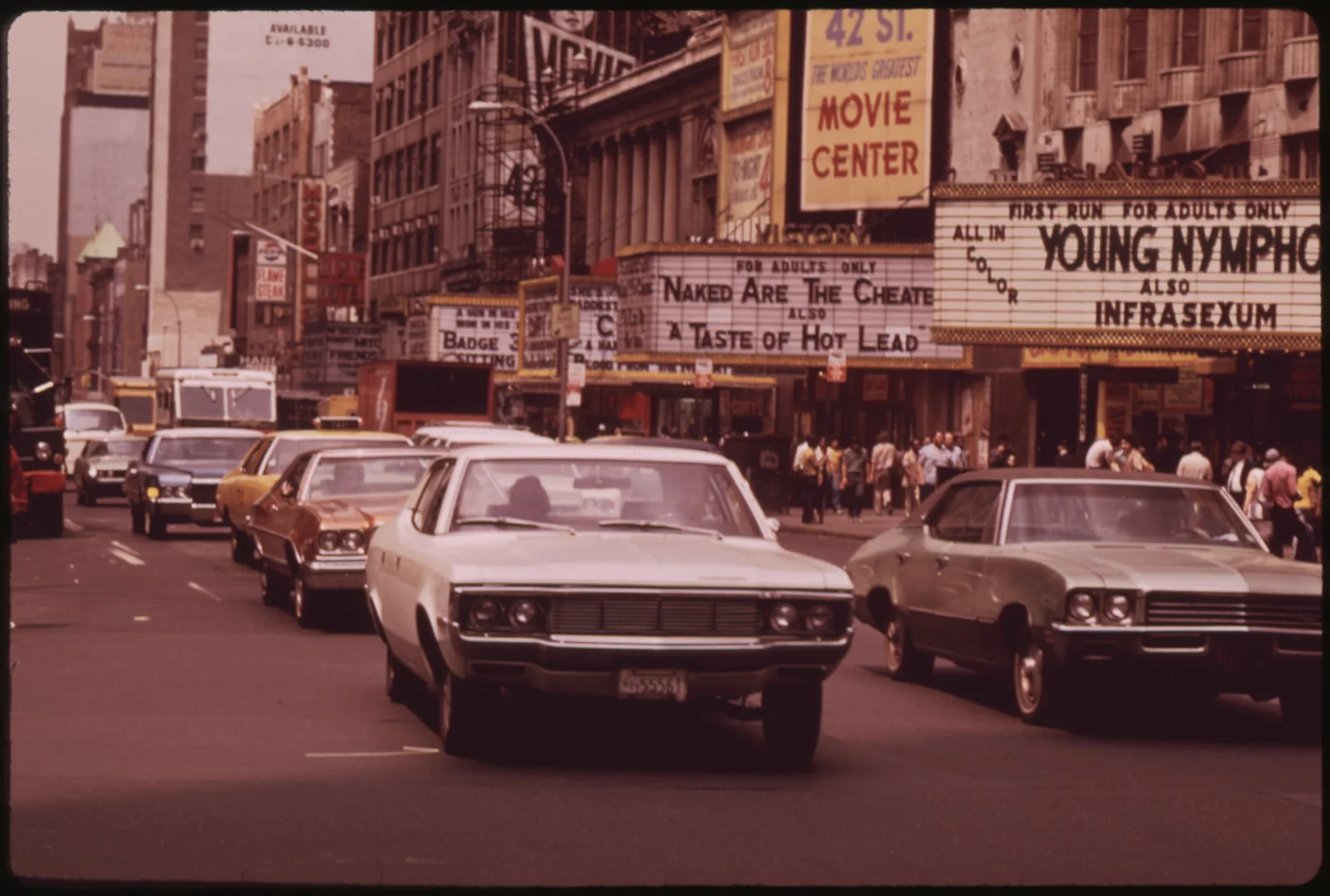


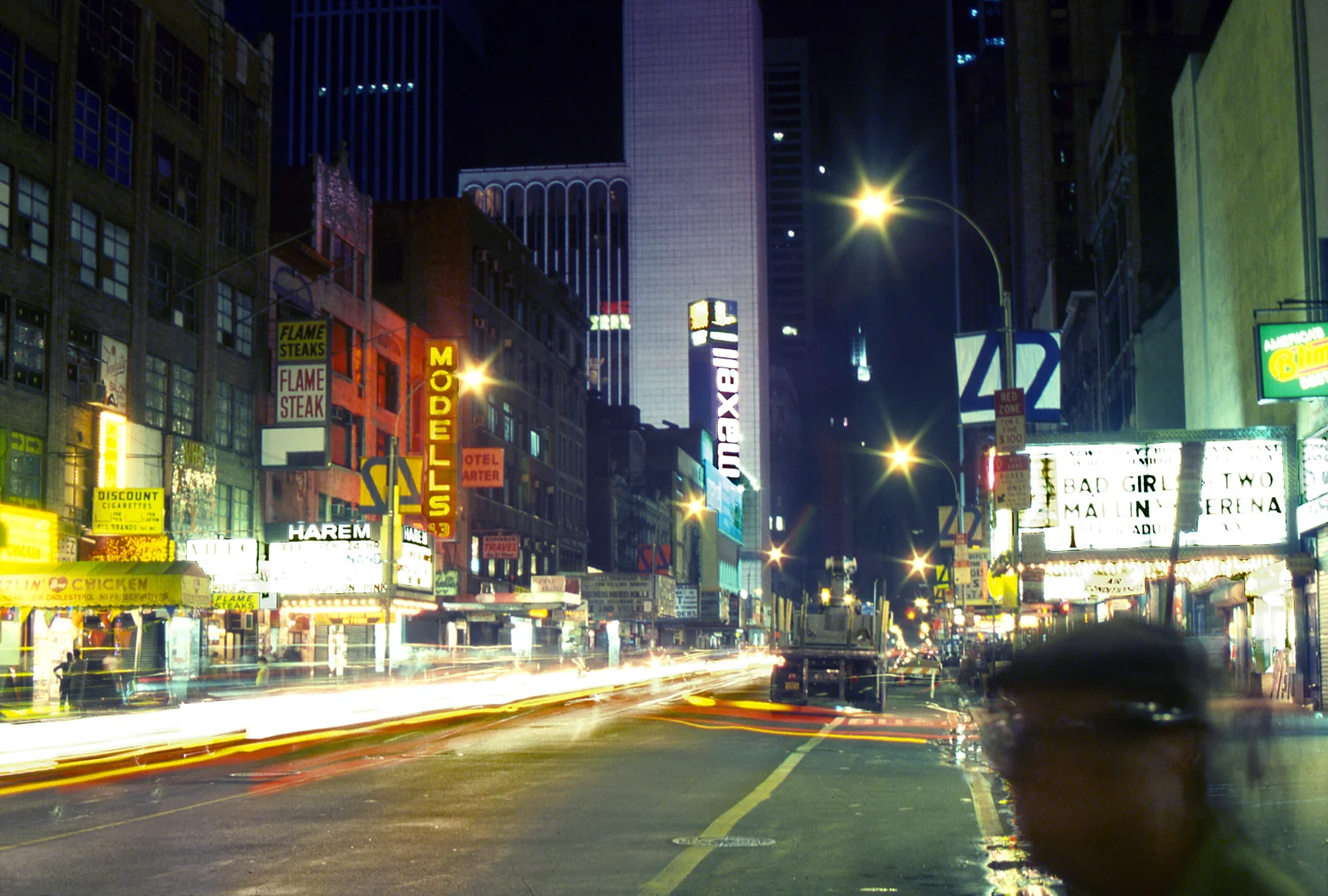
The cars in Dan McCoy’s photograph are backed up on 42nd Street. It’s August 1973. One theater is showing “A Taste of Hot Lead.” The marquee beside it is already running out of room. Down on the sidewalk, there are as many people to look at as there are signs.
Two years later, New York came close to bankruptcy. The details could get pretty dry if you followed the negotiations at City Hall. They were easier to follow at the subway turnstile, where a ride was about to cost more.
That same summer of 1973, a teenager named Cindy Campbell was getting ready for school. She wanted money for clothes, so she and her brother threw a party in their building in the Bronx. Tickets started at a quarter. We’re still talking about that party.
When the city ran short of money
New York was losing jobs and the tax revenue that went with them. Borrowing had allowed the city to put off the problem. The state stepped in, the federal government eventually lent money, and municipal unions helped work out a rescue. It kept the city out of bankruptcy and left New Yorkers with years of cuts. There were fewer city workers, wages were frozen, subway fares went up, and CUNY began charging tuition. 1, 2, 3, 4
In the South Bronx, the trouble had started well before 1975. Jobs were disappearing, discriminatory lending made it hard to get credit, and buildings were going up in flames or being abandoned. Plenty of people still lived on those blocks. Groups such as Banana Kelly and the People’s Development Corporation organized neighbors and got to work on the housing they had. 5


Some artists found space they could afford in former industrial buildings. In SoHo, even that was getting harder by the early 1980s. Whether cheap space made the city feel full of possibility depended a great deal on what you could afford and where you were trying to live. 6
Where people went to hear music
The name CBGB came from the music Hilly Kristal expected to put on when he opened at 315 Bowery in 1973: country, bluegrass and blues. The bands that made the room famous sounded little like that, or like one another. Think of the Ramones next to Talking Heads. Television, Patti Smith and Blondie played there, too. Kristal recalled asking bands to play their own songs. If you had a few songs and needed somewhere to try them, that was a good door to knock on. 7, 8
There were lodging houses on the Bowery, too. The men who lived there had been part of the street long before it became a destination for bands and their fans. In his account of those years, Kristal remembered discovering new groups and seeing some of his neighbors face violence. 8


Up on West 54th Street, getting in was half the story. Steve Rubell and Ian Schrager opened Studio 54 in April 1977 in a former theater and television studio. You could spend part of the night waiting outside while someone else was waved in and photographed. Rubell and Schrager’s run ended in February 1980. The club carried on under new owners into the middle of the decade. 9
David Mancuso started his Loft parties at home on Broadway on Valentine’s Day 1970. Over on King Street, Paradise Garage held parties while the club was still being built in 1977 and opened formally the following January. People came back for Larry Levan and a sound system built with unusual care. Much of the regular crowd was Black and gay. For those dancers, the Garage was somewhere they could make a night of it with people they knew. 10, 11
In April 1982, people came to the Garage for a different reason. Gay Men’s Health Crisis, which had only recently formed, held its first fundraiser there. As AIDS spread, a room people knew from nights out became a place to raise money and show up for one another. 11
The party in the recreation room
Cindy Campbell’s party was on August 11, 1973, in the recreation room at 1520 Sedgwick Avenue. Her brother Clive, better known as DJ Kool Herc, played the records. Girls paid 25 cents and boys paid 50. The money was for Cindy’s back-to-school clothes. 12
Herc paid attention to the part people wanted to dance to. He worked between records to stretch the instrumental break, giving dancers longer before the rest of the song came back in. That night at Sedgwick Avenue is a good place to start the story of hip-hop. To follow it, you have to go to other parties, too, and spend time with the DJs, MCs, dancers and graffiti writers who made it their own. 12, 13
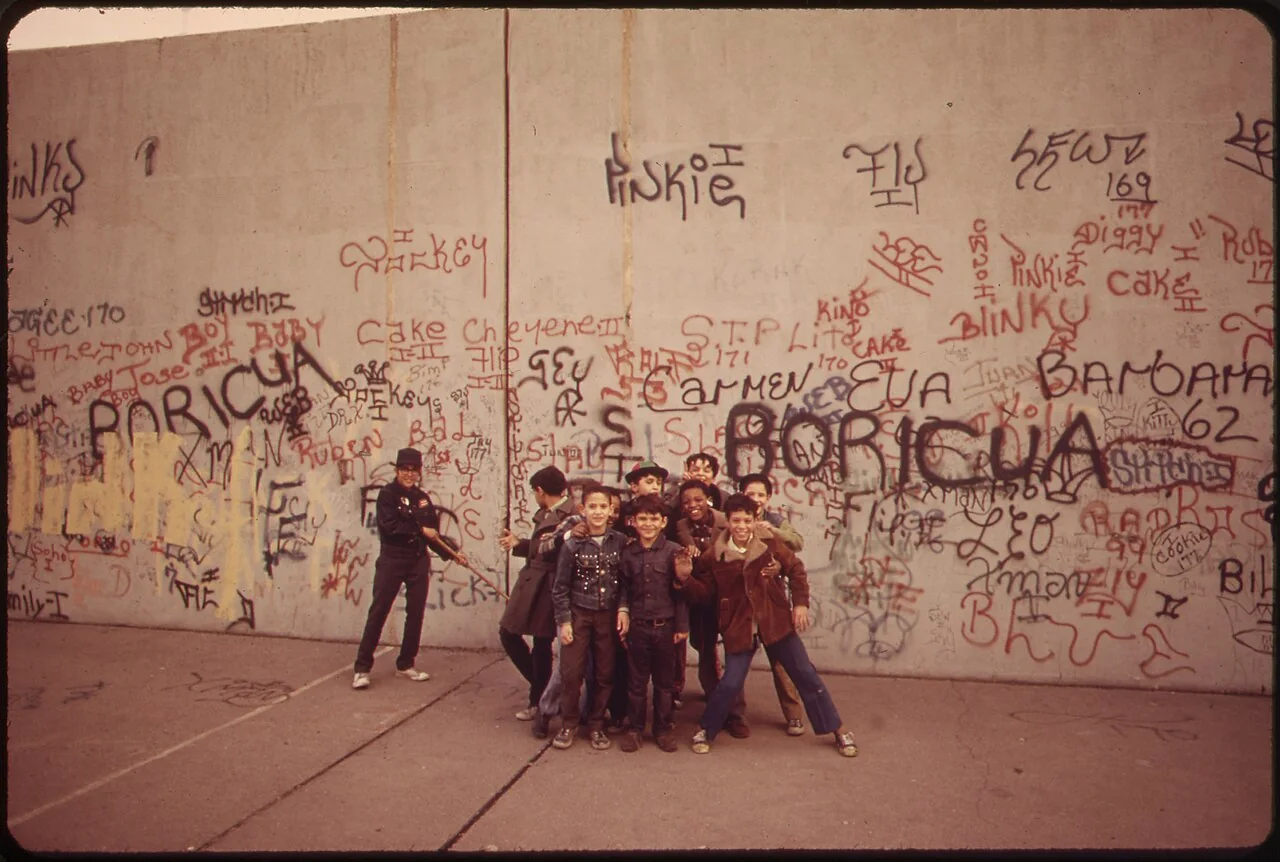
Dan McCoy also took a photograph on a Bronx sidewalk that spring. A group of young people is gathered next to a painted wall. It’s a small scene, and worth a look if most of the pictures you’ve seen of the Bronx in those years are of buildings after a fire.
After the lights went out
The power went out across much of New York on July 13, 1977. Along Bushwick’s Broadway shopping strip, stores were looted and some burned. The lights came back. For the people whose shops had been damaged or destroyed, there was still the question of how to open again. 14
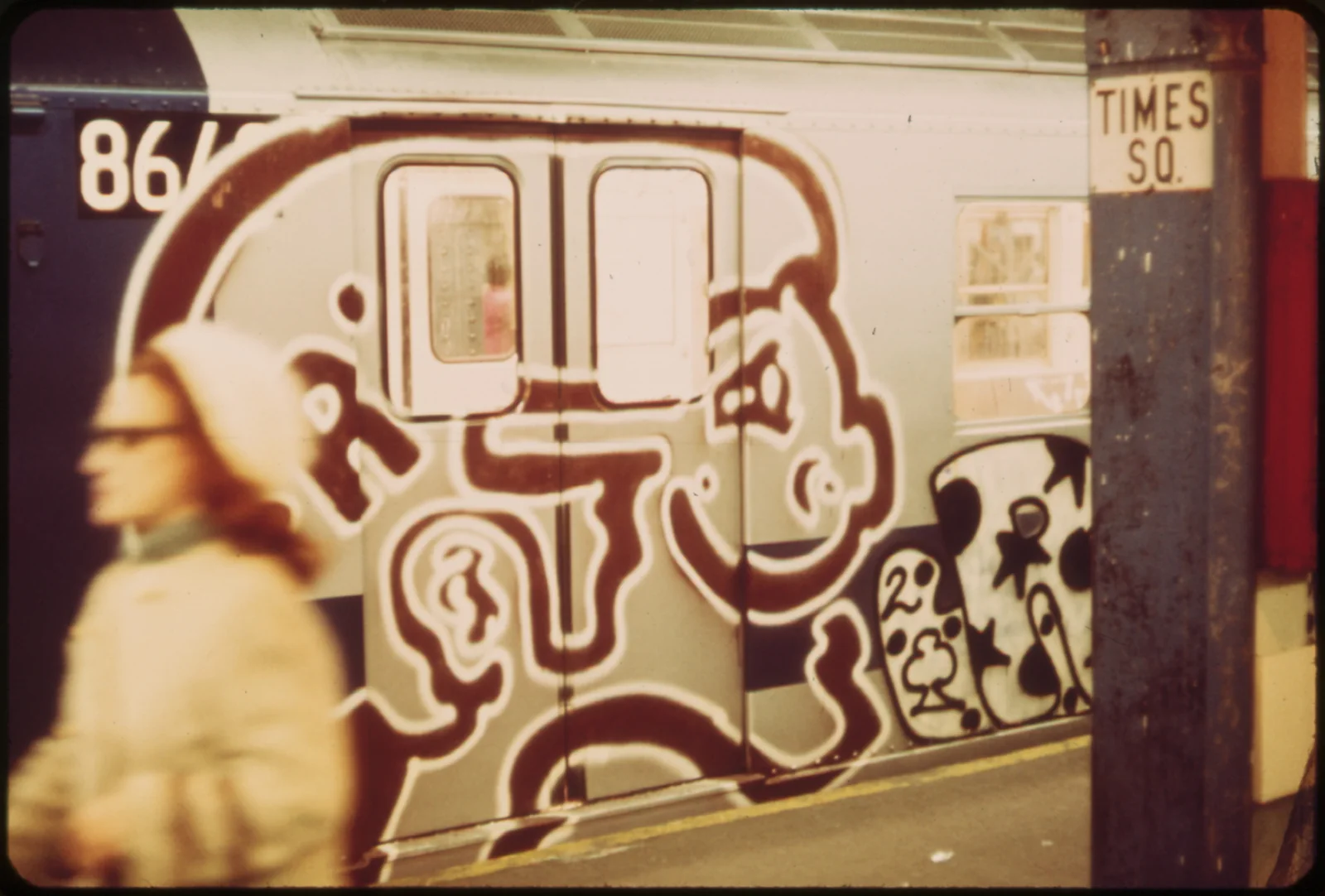


On the subway, a painted name could travel from one borough to the next on the side of a car. Riders saw the work whether they went looking for it or simply needed to take the train. In the photograph from Times Square, a passenger walks past lettering that takes up most of the side of a car. The trains themselves had worn down over years of neglect. In the early 1980s, the transit system began putting money into repairs and replacement equipment. 15
By 1985, some parts of the city were recovering, SoHo was getting more expensive, and neighborhoods that had lost housing and businesses were still living with those losses. Plans for remaking 42nd Street were moving ahead. The New Amsterdam Theatre would reopen in 1997, more than a decade after the photograph of the block below. 6, 16, 17
Go back to the first photograph and look down at the sidewalk. The marquees are easy to read. You can spend a fair bit of time with them before you notice how many people are in the picture. The photographs below are a way to take another look at the places they were passing through.
What’s Left of That New York?
Here’s what became of four addresses from those years. The photographs were taken on different dates and, in some cases, from different sides of the street.
315 Bowery
After CBGB
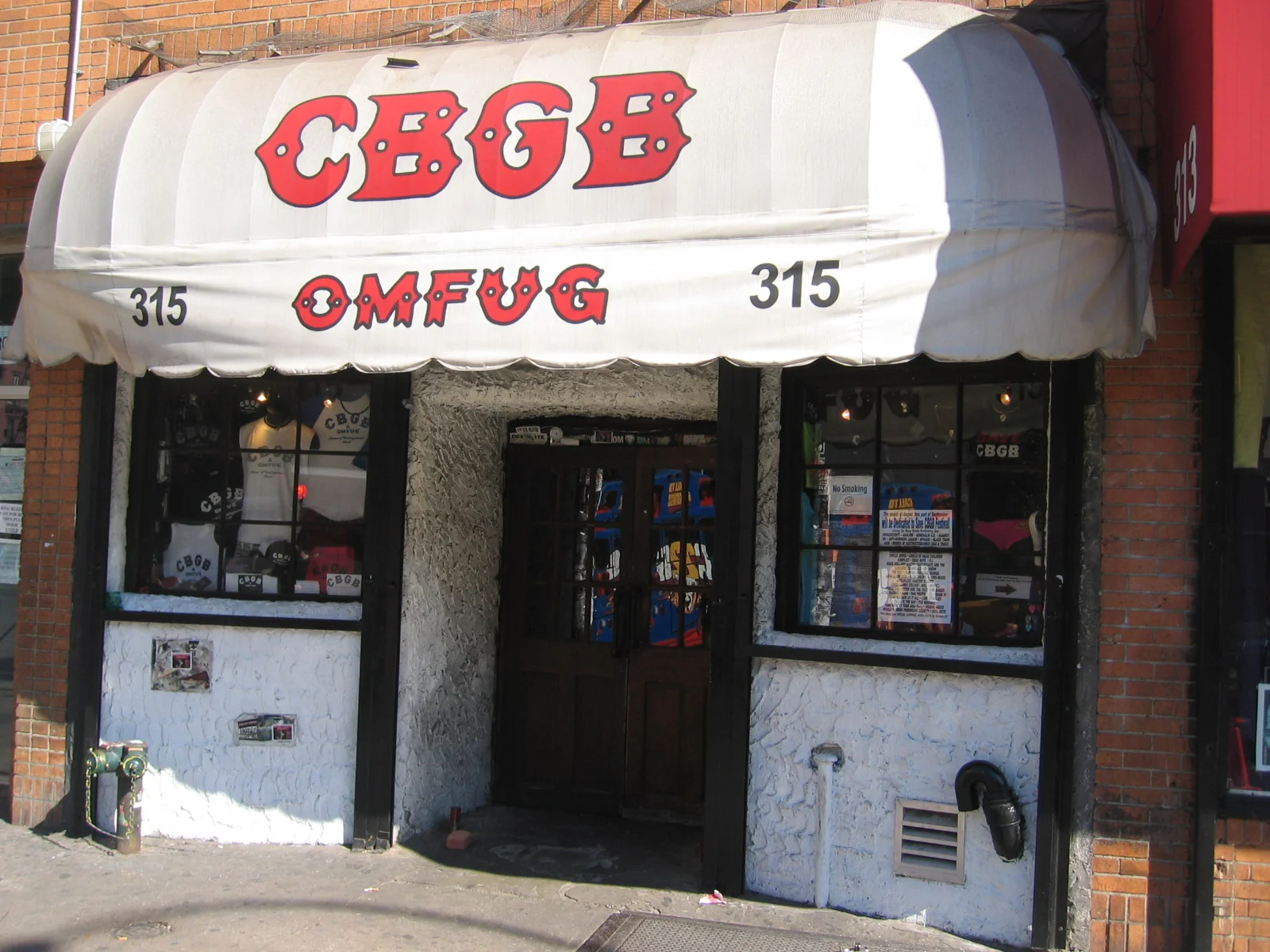
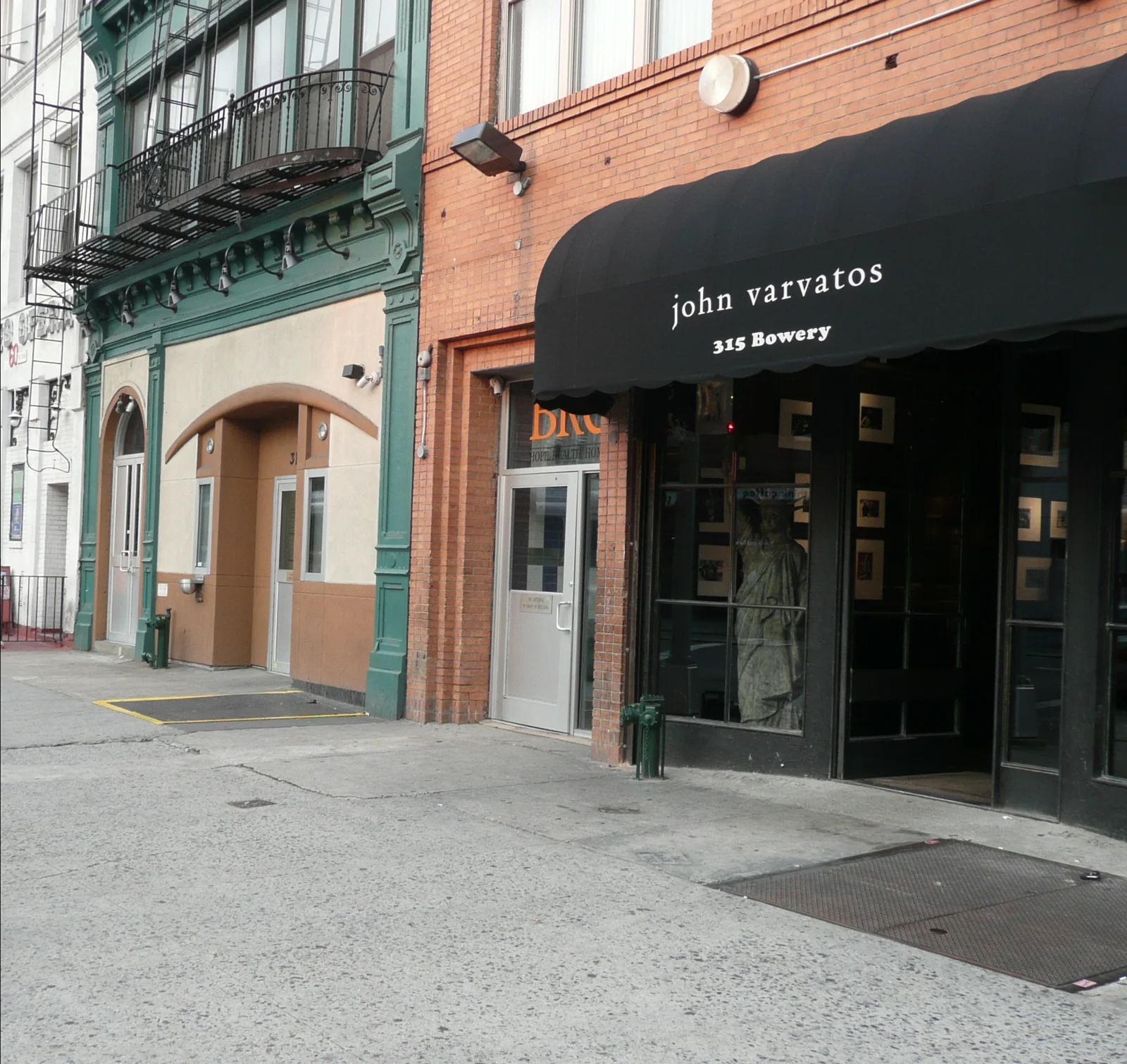
CBGB closed in October 2006. In the 2005 photo, the awning still says CBGB. By 2008, John Varvatos had moved into the space. Look for the brickwork around the front door to get your bearings. 7, 18
The same storefront from different angles, photographed in 2005 and 2008.
THE CLUB / 2005

THE STORE / 2008


Studio 54
The theater again
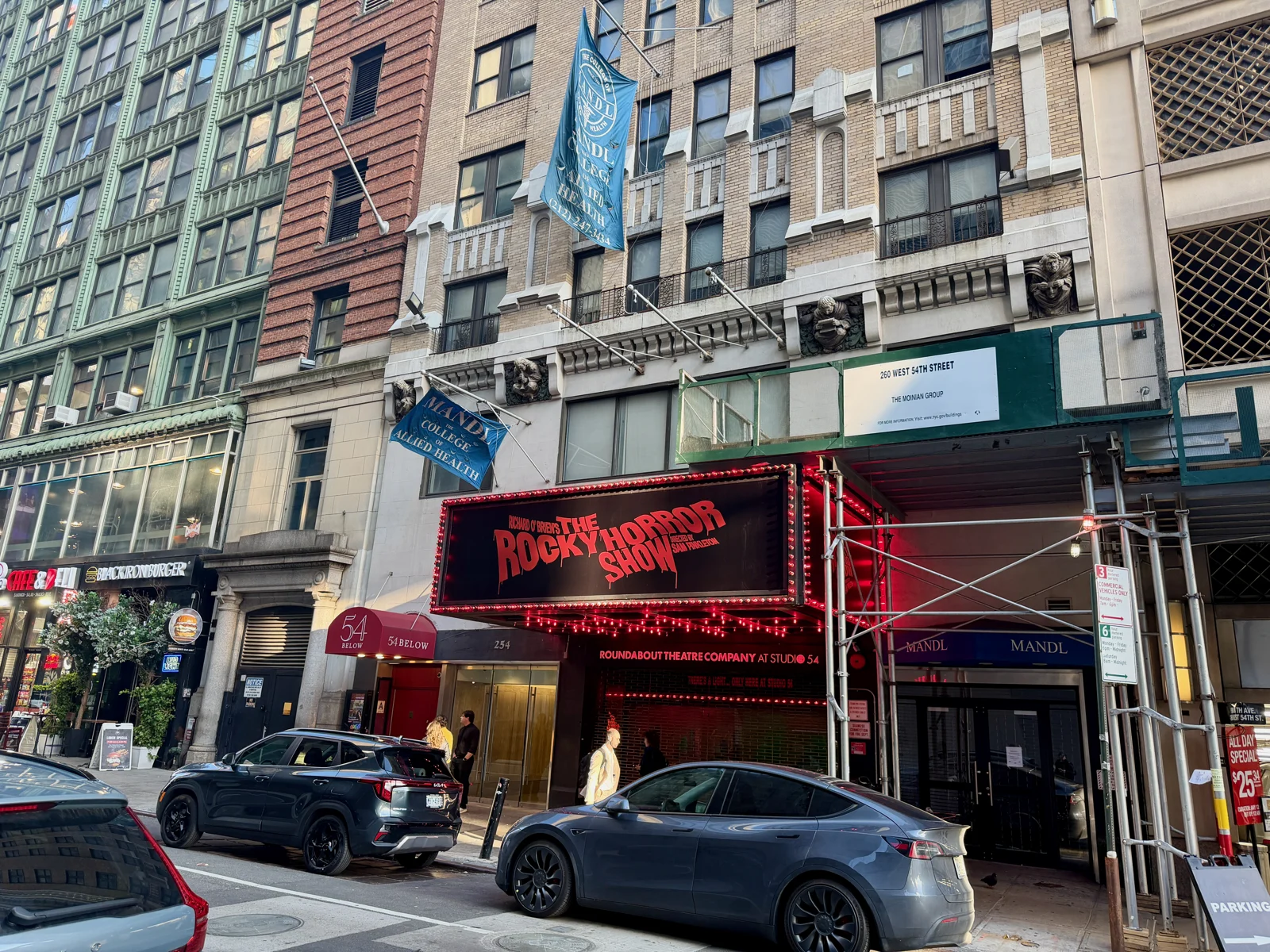
Before it was a disco, Studio 54 was a theater. Roundabout brought Cabaret to the building in 1998. It’s still one of the company’s Broadway houses. 19
The theater entrance, photographed May 3, 2026.
2026 / THEATER EXTERIOR

42nd St
The block between
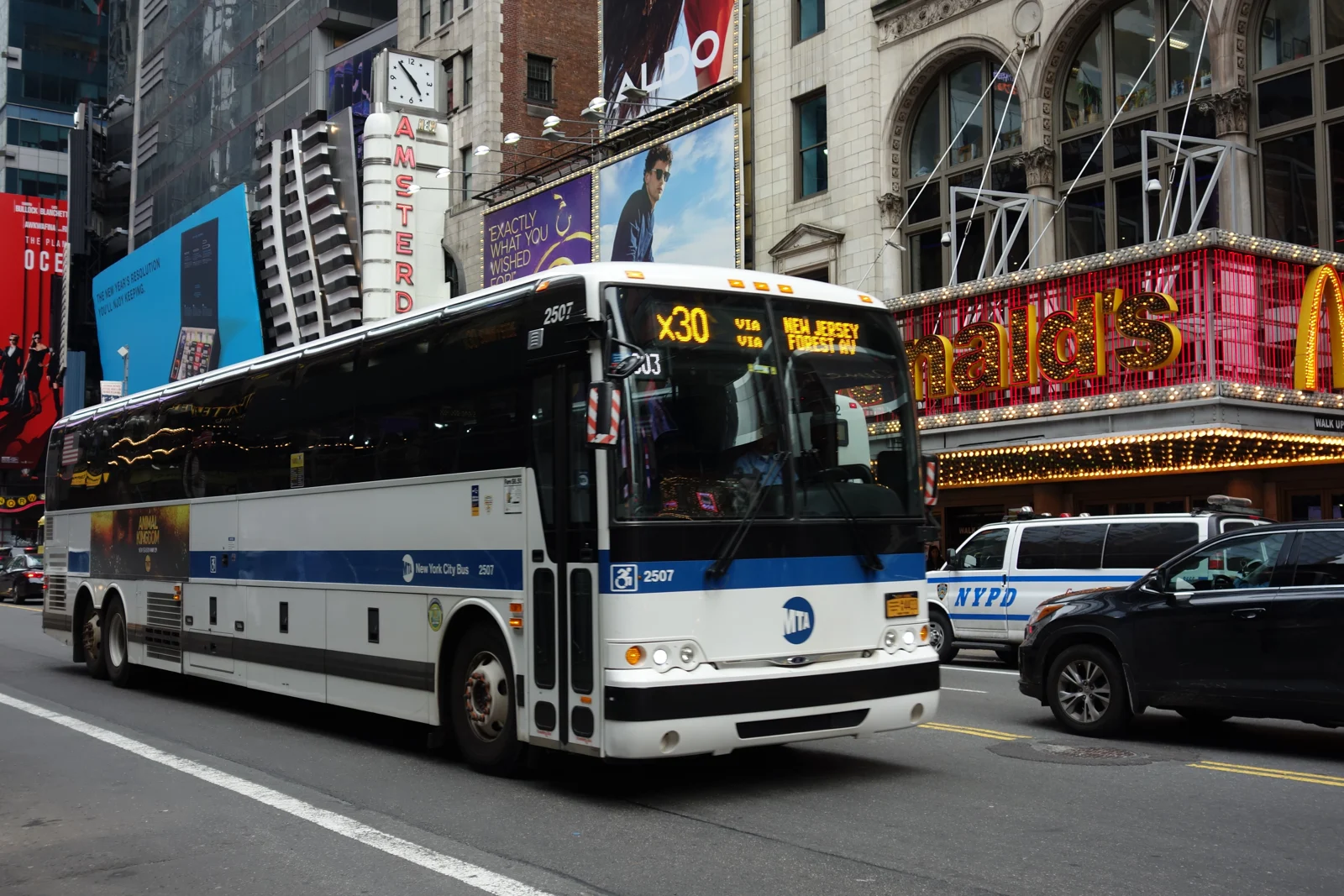
The 1984 photograph looks along the theater block. In the 2018 view, taken facing the south side of the street, the New Amsterdam sign is just above the bus. The theater reopened in 1997 after a restoration. 17
The same block from different angles, photographed in 1984 and 2018.
THE THEATER BLOCK / 1984

SOUTH SIDE OF THE BLOCK / 2018

1520 Sedgwick Avenue
Still somebody’s home
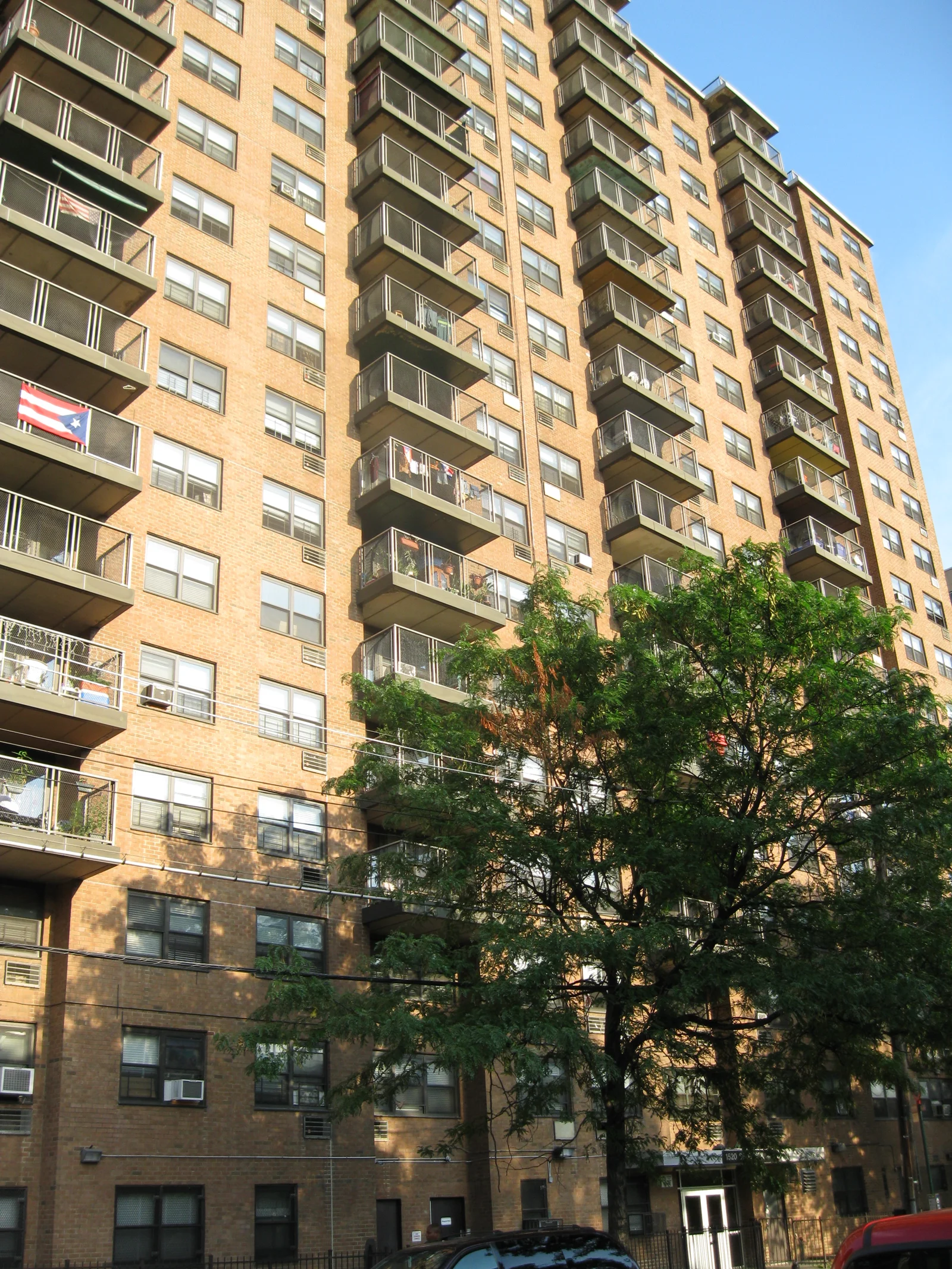
1520 Sedgwick Avenue is still an apartment building. The recreation room brought the address a lot of attention, and the tenants have their own history here. They organized to keep the building affordable. 20
The apartment building, photographed July 21, 2009.
THE RESIDENTIAL BUILDING / 2009


About the photographs
For the original records, credits and reuse details, see the image ledger.
Sources & further reading
Historical references and address listings were checked November 16, 2026. Each caption gives the date of the photograph.
- Fiscal crisis and the rescue
- Borrowing and recurring deficits
- Workforce, fare and tuition changes
- Baruch’s municipal finance archive
- South Bronx disinvestment and neighborhood rebuilding
- Rents, work and the early 1980s
- CBGB’s history and closing date
- Hilly Kristal’s account of original music and the Bowery
- Studio 54’s nightclub years
- The Loft
- Paradise Garage, its opening and the 1982 GMHC benefit
- Cindy Campbell and the Sedgwick party
- Hip-hop’s community and artistic forms
- Bushwick and the 1977 blackout
- Subway capital investment in the 1980s
- 42nd St redevelopment planning
- New Amsterdam reopening in April 1997
- 315 Bowery: current store listing
- Studio 54: current theater
- Sedgwick tenants and preservation